
To speak of The Second City is to speak of one of the most influential centers for contemporary comedy and improvisational theater. Since its founding in Chicago, the institution has served as a theater, school, company, creative laboratory, and professional platform for performers, writers, and directors. Artists such as Tina Fey, Amy Poehler, Stephen Colbert, Steve Carell, Bill Murray, and many others have passed through its stages and classrooms.
The body of literature concerning The Second City is extensive, yet quite diverse. It includes books that reconstruct the troupe’s history, manuals explaining specific improvisation principles, accounts from former members, memoirs by comedians, and works that apply improvisation concepts to business, education, or leadership. This guide aims to organize this material and explain the contribution of each work, situating them within a specific tradition and helping readers decide where to begin.
The Second City does not limit itself to teaching improv games or presenting spontaneous scenes to an audience. Its work occupies a middle ground between the improvised and the scripted: improvisations serve to discover characters, relationships, points of view, and premises; subsequently, that material can be selected, edited, rewritten, and incorporated into a revue-style show. That is why some of the books presented here deal with stage improvisation, while others explain sketch writing and others recount the company’s history.
A possible reading path for understanding The Second City would be as follows:
- Start with a history of its origins: The Compass Players and The Second City.
- Move on to a volume that gathers exercises, testimonials, and reflections from the institution.
- Next, read a manual written from the perspective of a specific performer or instructor.
- Consult the memoirs of former members to see what life was like in that professional environment.
- Finally, turn to books on applied improvisation.
History: From Viola Spolin to The Second City
The roots of The Second City lie in Viola Spolin’s theater games, the work of her son Paul Sills, and the experience of The Compass Players, a troupe formed in Chicago in the mid-1950s.
Viola Spolin developed a series of games and exercises designed to foster spontaneity, listening skills, concentration, and cooperation. In 1953, Paul Sills and David Shepherd founded the Playwrights Theatre Club near the University of Chicago. Two years later, they created The Compass Players, a troupe that used theater games and improvisation to build their shows. Its members included performers such as Mike Nichols, Elaine May, Shelley Berman, Barbara Harris, and Alan Alda. Although the troupe was relatively short-lived, its influence was significant. You can learn more about its history in Compass (Janet Coleman, 1991).
The Second City was founded in Chicago by Paul Sills, Bernie Sahlins, and Howard Alk in 1959. Its first revue premiered in December of that year at 1842 North Wells Street [wikipedia]. The name “The Second City” derived from a common epithet used to describe Chicago in relation to New York. The troupe turned this peripheral status into a source of identity: a critical, urban, and irreverent perspective on American politics, culture, and social mores.
Over the decades, The Second City evolved beyond being merely a theater troupe; it also became a school and a professional network.
Books on the History of The Second City
Below, we list books that allow you to delve into the history of the company and school. Each one preserves a different aspect of that history: the founders’ recollections, the performers’ experiences, the company’s evolution, and the institutional account of its legacy. This diversity of perspectives is precisely what enables a better understanding of an organization that has changed significantly since its inception. We present them here in chronological order.
Something Wonderful Right Away
This is a seminal book for understanding the early years of this tradition. Its oral history approach reconstructs the atmosphere of The Compass Players and the beginnings of The Second City through the firsthand accounts of those who participated in these projects.

Something Wonderful Right Away (Jeffrey Sweet)
Something Wonderful Right Away: An Oral History of the Second City and the Compass Players Descubra la historia tras bambalinas de cómo el teatro The Second City creó una generación de grandes actores, directores y escritores de talla mundial. A finales de los años…
The Second City Almanac of Improvisation
This volume, published in 2004, brings together a diverse range of materials and reflects the very variety of The Second City. It includes recollections, essays, exercises, and reflections related to improvisation and the company’s practice.

The Second City Almanac of Improvisation
Todo comenzó en una lavandería china reformada en el lado norte de Chicago en una fría noche de diciembre de 1959. Nadie podría haber sabido que para el próximo siglo, The Second City se habría establecido como la principal institución de comedia del mundo.…
The Second City Unscripted
Mike Thomas constructs a history of The Second City based on testimonies from former members and historical documentation. Thomas examines the institution’s evolution, its artists, and its relationship with the entertainment industry.

The Second City Unscripted
The Second City Unscripted: Revolution and Revelation at the World-Famous Comedy Theater En 1959, un grupo de habitantes de Chicago con ideas afines unieron fuerzas para abrir un local moderno y vanguardista dedicado al café, los cigarrillos, la conversación y la comedia. El resultado,…
The Second City: The Essentially Accurate History
This book offers a revised and expanded institutional history. The work spans six decades and also incorporates material on SCTV, as well as commentary and behind-the-scenes stories.

The Second City: The Essentially Accurate History
Desde su inauguración en 1959, The Second City ha transformado el panorama de la comedia tal como la conocemos, creando una cultura de improvisación sumamente divertida y formando a miles de artistas —que hoy dominan el entretenimiento popular— en el arte del teatro de…
The Second City: Backstage
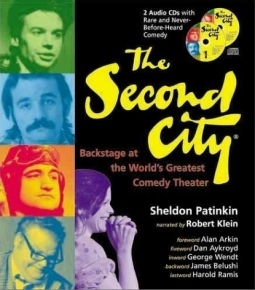
The Second City: Backstage at the World's Greatest Comedy Theatre
A history of the influential Chicago improvisational comedy group provides background on its best-known…
The Method and the Practice
The distinctive feature of The Second City’s method lies in the use of improvisation both as a performance practice and as a tool for generating and refining material. Through improv games—inherited from Spolin—performers address specific challenges regarding attention, space, communication, and their relationships with fellow performers. The Second City operates based on a collective approach to the scene; performers do not build their characters in isolation, but rather in relation to their scene partners, the space, the activity, and the conflict.
Its key tools:
- “Yes, and”: accepting a proposal and adding new information.
- Character, relationship, and point of view.
- Improvisation and writing: improv exercises serve as tools for writing sketches.
- Working within the revue format.
Not all books that use terms like “spontaneity,” “listening,” or “Yes, and” describe the same method. Some present a specific pedagogical approach; others offer a personal interpretation; and still others use improvisation as a metaphor for collaboration. The best way to understand The Second City’s practice is to observe how it connects three distinct stages: the game that trains a skill, the improvisation that uncovers a possibility, and the writing or editing process that transforms that possibility into a performable scene.
The works of Viola Spolin could also be added to the list below, as they are foundational to The Second City’s work.
A Subversive’s Guide to Improvisation (David Razowsky)
This is the ideal book for developing a critique of the simplistic use of “Yes, And.” Razowsky advocates focusing on presence, perception, and concrete responses to what is happening on stage. His approach centers on working from an awareness of the present moment, without relying on preconceived premises or rigid formulas.

A Subversive's Guide to Improvisation
A Subversive's Guide to Improvisation: Moving Beyond "Yes, And" Improvisadores, pueden hacer lo que quieran. En A Subversive's Guide to Improvisation, Razowsky pone de cabeza la sabiduría convencional de la improvisación al brindarte una visión única sobre cómo crear escenas de improvisación magistrales. Describe cómo…
Improvisation at the Speed of Life (T. J. Jagodowski y David Pasquesi)
This book presents a different perspective. It focuses on T. J. and Dave’s long-form improvisation—specifically on listening, patience, relationship, and the organic development of a scene.

Improvisation at the Speed of Life: The Tj and Dave Book
T.J. y David son maestros improvisadores galardonados y reconocidos internacionalmente de la legendaria escena de Chicago. Esta mirada en profundidad a las técnicas, principios, teoría e ideas detrás de lo que hacen es a la vez autorizada y entretenida. Desde sus primeros años jugando…
Applied Improvisation
Applied improvisation employs the principles, tools, and practices of theatrical improvisation in non-performance contexts. In the case of The Second City, this activity is primarily carried out through Second City Works—its division dedicated to professional training and organizational change—led by Kelly Leonard.
Yes, And
This is the definitive book on applied improvisation from The Second City’s perspective. Leonard spent decades with the organization, and Yorton headed Second City Works. The book translates improvisation principles into the realms of collaboration, leadership, creativity, and innovation.

Yes, And: How Improvisation Reverses "No, But" (Kelly Leonard, Tom Yorton)
Los profesores de The Second City, el teatro de comedia y la escuela de improvisación más importantes del mundo, revelan técnicas de improvisación que pueden ayudar a cualquier organización a desarrollar a sus innovadores, alentar líderes adaptables y construir negocios transformadores Durante más de cincuenta…
The Second City guide to Improv in the Classroom
This book brings improvisation exercises into the educational realm. The Second City has developed creative pedagogy programs that use improvisation exercises to address learning content and skills, rather than simply to train actors.
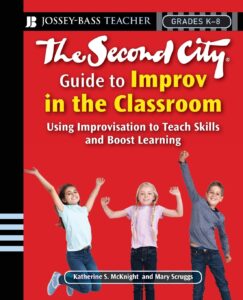
The Second City Guide to Improv in the Classroom
The Second City Guide to Improv in the Classroom: Using Improvisation to Teach Skills and Boost Learning La mayoría de la gente conoce The Second City como una escuela innovadora de improvisación que ha formado a talentos destacados como Alan Arkin, Bill Murray, Stephen…
Alumni
The Second City has served as a training ground for performers, writers, and directors, yet not all of its alumni have written books on improvisation. In addition to those previously mentioned, we will take a look at the works of two prominent alumni: Amy Poehler and Tina Fey. The memoirs of Amy Poehler and Tina Fey offer context regarding the careers of two artists linked to the Chicago scene.

Yes, Please
¿Quieres conocer mejor a la mujer que nos conquistó en Upright Citizens Brigade de Comedy Central? ¿Te gustaría pasar un rato con la mujer que te hizo reír a carcajadas en Saturday Night Live y en películas como Baby Mama, Blades of Glory y…

Bossy pants
Una vez en una generación aparece una mujer que lo cambia todo. Tina Fey no es esa mujer, pero conoció a esa mujer una vez y actuó de manera extraña a su alrededor. Antes de 30 Rock, Mean Girls y 'Sarah Palin', Tina Fey…
Extra ball

Process (Mary Scruggs, Michael J. Gellman)
Process: An Improviser's Journey Proceso: El viaje de un improvisador es un recurso invaluable para dominar la improvisación. El famoso entrenador de improvisación Del Close le encomendó al autor, profesor e improvisador Michael Gellman una misión: “Crear obras improvisadas en un acto de calidad…

Whose Improv Is It Anyway?: Beyond Second City
En ambos lados del escenario, la popularidad de la comedia de improvisación ha aumentado exponencialmente durante las décadas de 1980 y 1990 y en el nuevo milenio. ¡Presto! Una canción original se crea de la nada. Con nada más que una sugerencia de la audiencia,…
No Comments