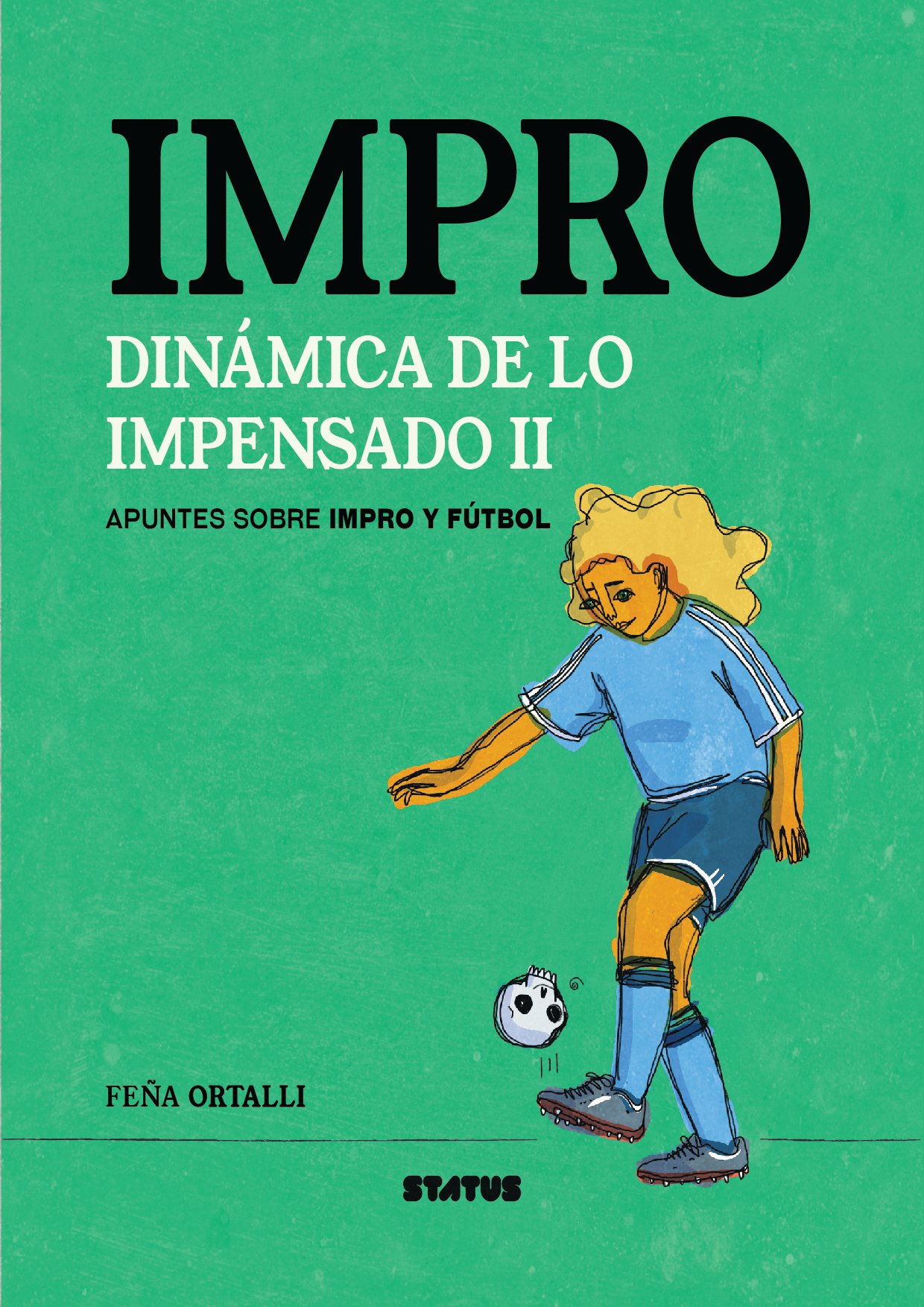
In this manual the author tells in detail what theatrical improvisation is and what we can use it for. A set of creativity, theatrical and sports techniques, which help us work as a team and enhance our own imagination. Whether it is to build stories in the moment, interpret roles, improve our communication or lose the fear of presenting ourselves live. It can be learned and used by any person or any work group that is not dedicated to the performing arts, but wants to explore and enhance their own creativity and communication. This book should have it all for a coach, teacher, professor, and/or facilitator, being a fundamental tool to develop people’s creative potential, improve their communication and expressiveness, motivate them to innovate by learning from mistakes and unforeseen events, and learn to take them as opportunities for growth. Contains 12 classes and initial level theatrical improvisation (for online and in-person modality). Manual of twelve theatrical improvisation classes (initial level) ready to teach, with technique, methodology, description and links of each exercise to watch on video. More than 70 games and dynamics to enrich your classes, awaken your imagination and enhance your creativity that will make your classes and…
spanish
The content of this book is the product of a research process: the object of study is the actor and his creative process for the construction of the character. It is determined that it is during the rehearsal period when the actor lives his creative process, and it is the improvisation the tool that is used to achieve the objective, in particular of the actor when creating his character, and in general of all the other actors and specialists in stage languages, together with the director, to achieve stage dramaturgy as a whole. In these pages the reader will find a methodological proposal that will favor the creation of the character through improvisation, in which he will search, find and define the actions of his character, allowing him the internal and external characterization of the role. We know that this book will be useful to all those who dedicate themselves to the performing arts, professionally or as amateurs, to students and acting teachers; but also, we invite readers in general to learn about the creative mechanisms that an actor faces to build his character.
This book, an essential read in terms of theater pedagogy in Argentina, proposes a set of exercises and games for the training and development of the actor. Jorge Holovatuck and Débora Astrosky, actors and theater teachers with extensive experience, call acting “the great game” and display in these pages an excellent instruction manual on “how to play” and “with what rules.” From practice and reflection they face the most substantial problems of acting: availability, disinhibition, relaxation, work with the imagination, integration, trust, adaptation, knowledge of dramatic structure and many others. Especially aimed at theater teachers throughout the country, this volume includes, along with numerous exercises, the sections “Reflections for the teacher” and “Notes”, where Holovatuck and Astrosky explain how to carry out a planning model, a course, an annual planning and a class plan. Soon Atuel will release other writings on theatrical pedagogy by Jorge Holovatuck and Débora Astrosky, who start from the creative slogan: “Give me a point of support and I will move the world.”
This book, which is the continuation of 60 theatrical training exercises, proposes a preparatory work , as a workshop, for the representation of a play. With the help of a series of commented exercises, which leave a large part to improvisation, training is proposed for collective listening, concentration, relaxation and dynamization of the body, as well as work on breathing, muscles and the joints.
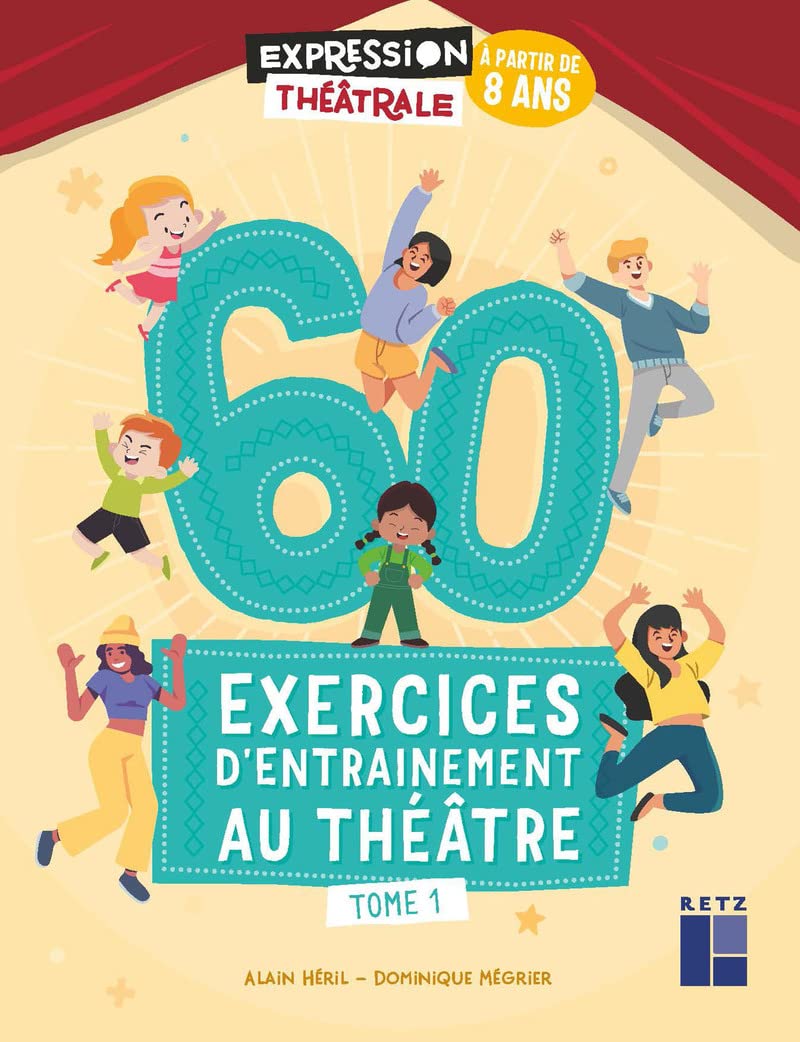
A complete, key work, which will help children enter into your theatrical practice more easily. Teachers, educators and even facilitators will find in this collection 60 theater training exercises for young actors aged 8 and over. These fun and varied little activities will allow you to address different essential aspects of acting, such as reflection and work on the body, space, breathing and voice, listening and rhythm, relaxation. The children will learn, over the course of the sessions, to overcome their shyness, to control their gestures, their voice and to change their state. This book also offers advice on how to organize a session and training for a show or workshop depending on the time available: three days, a week, a school year. Its aim is to help teachers and participants find all the satisfaction promised by this wonderful source of motivation that is theater.
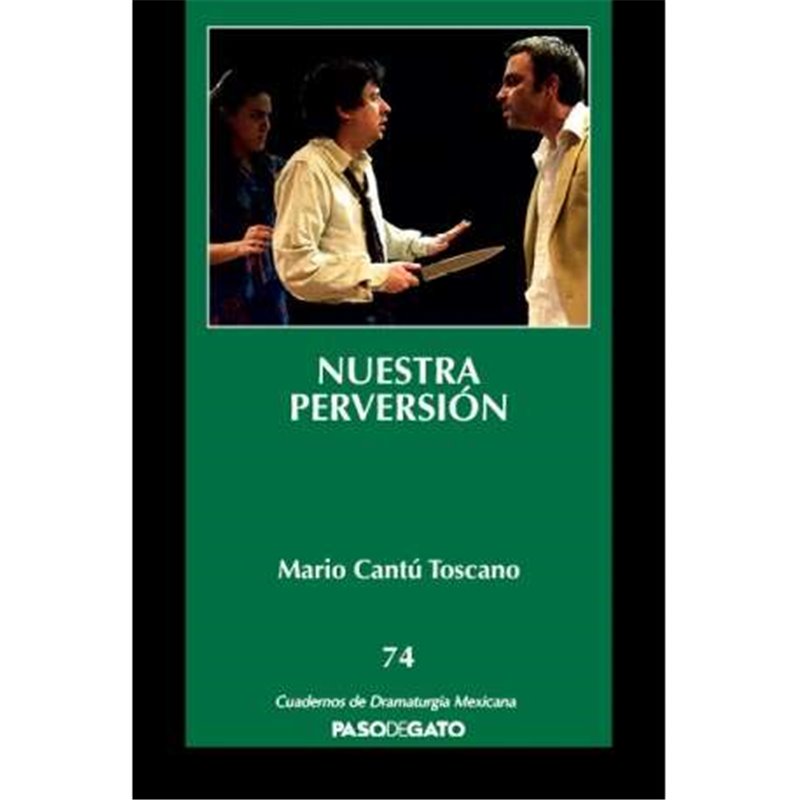
BOOKLET 74. OUR PERVERSION “Stage narration seduced so many playwrights in Mexico during the last ten years that the difficult thing, for some time now, is finding a text with dialogue. Even more so, with a well-written one. The copy that you have in your hands, reader, is one of those unusual cases,” says Alejandro Ricaño in the presentation of the work, whose characters are two employees of a corporation who “spend their workdays tallying numbers to evade taxes, while they plan that one sleeps with the wife of the other.”
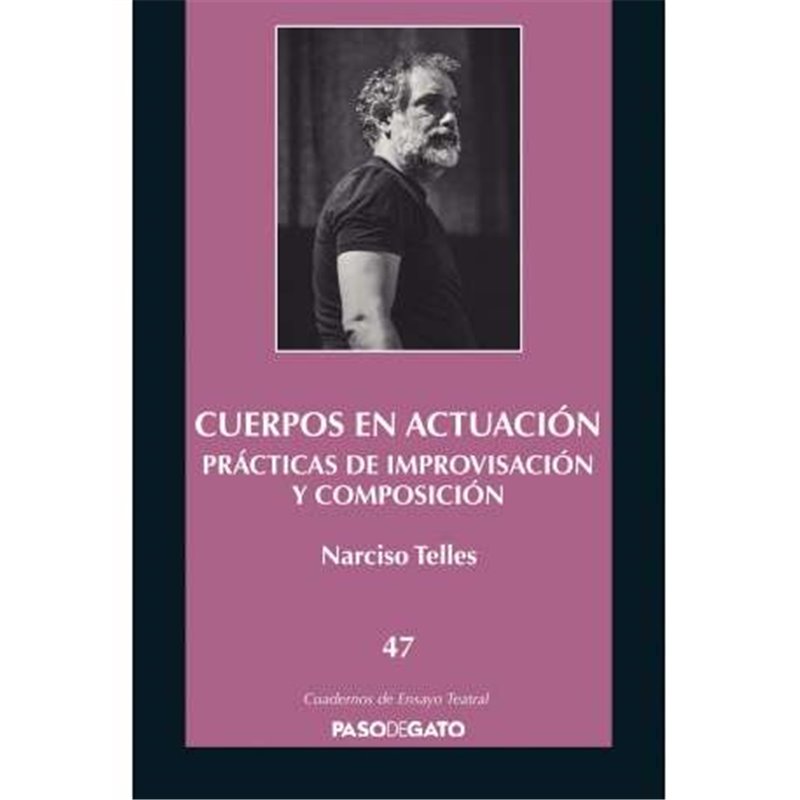
THEATER REHEARSAL BOOKLET 47. BODIES IN PERFORMANCE. IMPROVISATION AND COMPOSITION PRACTICES What are the ways of constructing knowledge in the arts of the body? asks Narciso Telles in this essay, whose research, as an artist-teacher, hasbeen directed at the processes and poetics of acting and improvisation in the theater, particularly when it comes to “poetically and politically confronting the issues of our time.” Narciso Telles is an actor, director and researcher at the Study and Research Group on Creation and Training in Performing Arts at the Universidade Federal de Uberlândia (GEAC/UFU), Brazil.
With academic erudition and supported by extensive experience as a repentista, the author proposes a study of the improvisation of the décimas following a method that allows us to appreciate both the beauty and the poetic complexity in this stanza frequently used in popular Ibero-American poetry. As Díaz-Pimienta points out, improvisation is “an art so complex and so unknown that it should be tempting to researchers.” This volume is an original and necessary proposal to address new studies of the improvised décima, as well as an invitation to the reader to discover poetic findings in ancient forms that continue to be sung throughout the pan-Hispanic territories, from the expert hand of a born researcher.
This book is a practical theoretical guide for improvisers, storytellers and artists in general to learn to tell better stories. It combines knowledge of cinema and theater to, through examples of well-known classes and films, provide valuable information about narrative structures, types of conflict, characters and their function and much more. It is a self-publishing, you can obtain it contacting the author directly: Pablo Boraquevich (@boraimpro) This book can be obtained in digital format for less than €10
Foreword by Omar Argentino Galván Everything in favor is the result of the study, research and implementation of the philosophy of theatrical improvisation (Improv) through 25 years of experience as an actor, director and improviser of its author, Omar Medina. All in favor is also the author’s pretext to make a review and generate a dialogue between various authors of theater theory, literature, directors and emblematic improvisers of the Impro theater discipline (Johnstone, Brook, Brecht, Stanislavski, Meyerhold, Chekhov, De Tavira, Calvino, Close, Juvera, Galván, et al.). Everything in favor is a book about philosophy, theater and also about the way of life that improvisation involves, not only in the theater, but taken into the daily life of any reader.