This book can be a valuable help for Dramatization and Theater Workshop teachers at different levels of education, as well as for actors, cultural entertainers and other groups that intend to work with the ‘improvisation meeting’, an intermediate activity between the game dramatic and the representation of a theatrical work. Improvisation is part of the didactic procedures that are grouped under the name of simulation and game. The work allows teachers to use improvisation as a didactic procedure that can develop in the student the skills of communication, expression, elocution, writing, analysis and criticism. It includes a good number of activities and exercises.
spanish
Ediciones Status presents “Impro: Dynamics of the Unexpected”, the first book by Feña Ortalli. A book that presents a series of ideas and concepts of improvisation explained through football analogies. In “Impro: Dynamics of the Unexpected”, Feña Ortalli takes us out onto the playing field without losing sight of the board. In a masterful way he immerses us in the history of the greats and allows us to get the ball rolling with our proposals.” Javier Pastor (Director of El Club de la Impro) Web
The book that Alexis Díaz-Pimienta has written is a new book, in the full sense of the word: almost everything that is said in it, is said for the first time. And although the phenomenon it deals with is not new at all, it is unknown to many, even in the field of culture and scholarship, because there are hardly any bibliographical antecedents, and these, in any case, are very recent. In such a way that Díaz-Pimienta’s book comes to discover an authentic and portentous “new world”, in old times like the ones we live in when cultural discoveries seemed finished.
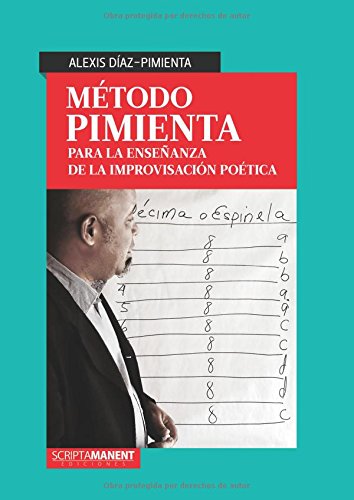
The improviser is born or made? This question has been on the minds of improvisers, lovers and students of poetic improvisation for centuries. And the answer has almost always been the same: «It is born. “You cannot learn to improvise, because it is an innate gift.” However, the Pimienta Method, with which hundreds of children and young people in Cuba have learned, is an affirmative and contrasted answer to this eternal question. Its creator, the Cuban repentista Alexis Díaz-Pimienta, began at the age of 5 on Cuban radio and television, and has accumulated more than 40 years of repentista experience, more than 25 years of research and more than 15 years of practices teachers in Cuba, Spain and other Latin American countries. This method is completely playful and participatory, effective for learning to improvise in verse, in any strophic form and in several languages: Spanish, Portuguese, Italian, Galician and Catalan, fundamentally. All of this… in a brief amount of time. It does not matter if the apprentice starts from scratch or if he has experience and wants to perfect his techniques. Furthermore, the method is designed to learn and also to teach. It includes oral, written, table, playground, blackboard games…
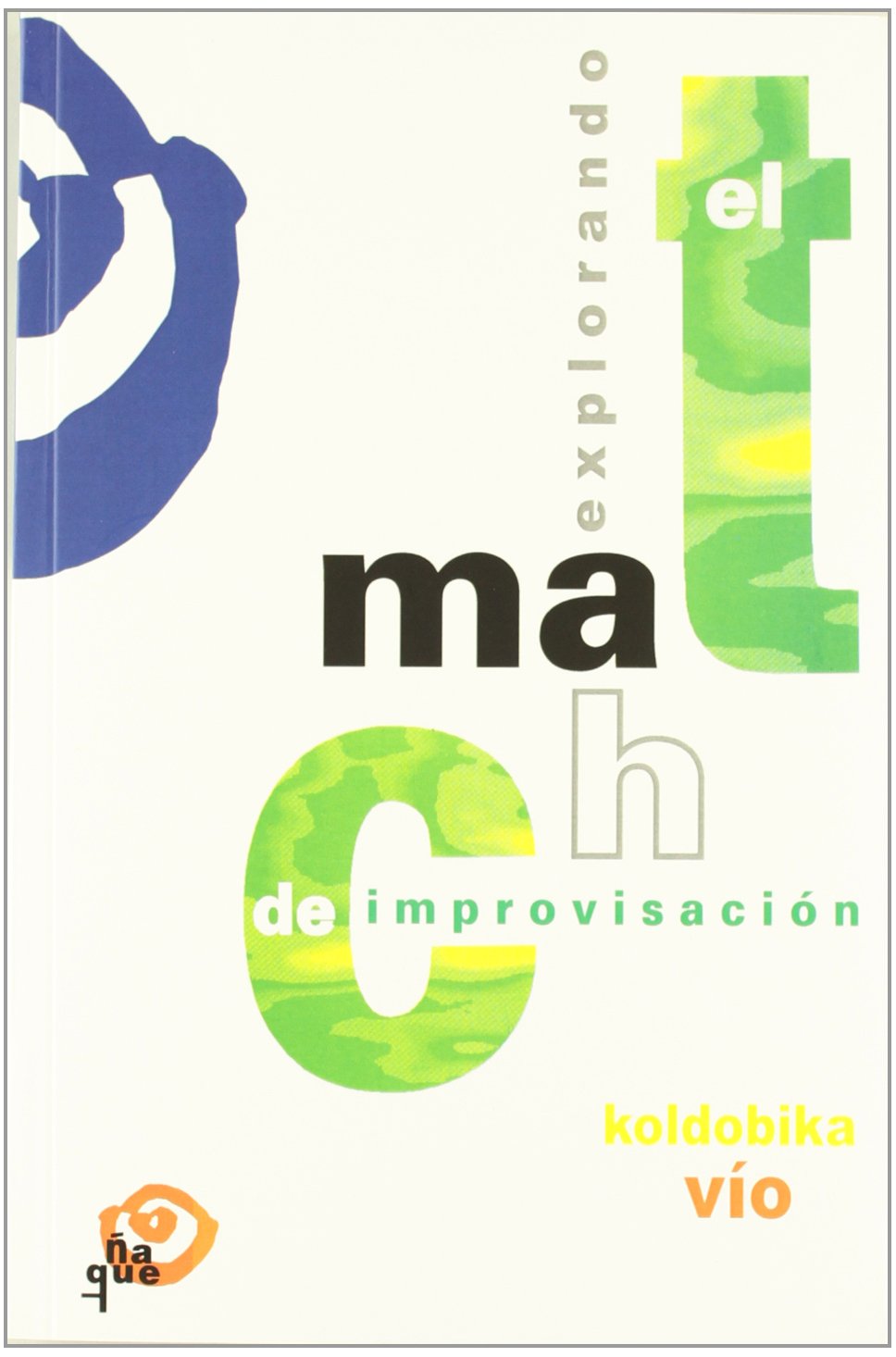
The THEATER PEDAGOGY Collection presents this text on the Improvisation Match as a tool within the field of expression and creativity. Like all Ñaque Editora publications, it combines theoretical depth with the freshness of practice. KOLDOBIKA GOTZON VIO, a student of Georges Laferriére, shares his experience and that of his teammates, D’lmpro Kolektiboa. “EXPLORING THE IMPROVISATION MATCH” is an invitation to enter and enjoy the world of Match: “A theatrical game collective in which, through improvisation techniques, several teams compete cooperatively and where the audience is an active part of the show.” Teams and public are part of a process of growth, fun and pleasure. Prefaced by the promoter of Match in Spain, Georges Laferriére, Professor of Dramatic Arts Didactics at the University of Quebec in Montreal; The book deals with how a Match team can be trained in its early phases and its in-depth study of this work, all seasoned with keys for its pedagogical use. For fans of this game-technique; for actors and actresses; for trainers who wish to apply it in the workshop or classroom.
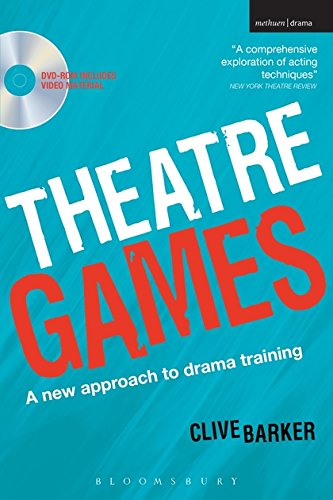
“Clive Barker’s book is more than just a guidebook of improvisational games for actors: it is, rather a comprehensive exploration of acting techniques” New York Theatre Review “Theatre Games is a massive contribution to the art of theatre…A bulging portfolio of credo, craft, advice and instruction…It is dazzlingly astute and a thrilling read – quite unlike a text-book, rather a long, fascinating chat into the small hours” The Stage Theatre games are a method of training actors that was developed in the 20th century by leading practitioners including Clive Barker, who trained actors at Joan Littlewood’s Theatre Workshop in its heyday. He developed his “theatre games” system over 20 years and proved its effectiveness for teachers, students and actors alike. His famous book combines his philosophy and approach to games, describes how to play them and the acting skills which can develop out of them. The games are arranged in order of complexity and illustrated with photographs and diagrams. This re-issue of this classic and timeless text now includes a DVD with video material showing Clive Barker teaching his games in a studio and contains background information and first hand material from Clive himself. Theatre Games will enable anyone involved…
Free Play discusses the inner sources of spontaneous creation, explains how to learn the skills of improvisation, and suggests ways to overcome common obstacles to creativity.
Improvisation, the art of creating the moment Carles Castillo opened our eyes to mime with his book “Mimo, el grito del gesto” (“Mime, the cry of the gesture”). Now, with “Improvisación, el arte de crear el momento”, he brings us closer, and opens the way to the difficult and precious art of improvisation. In the style of this teaching actor, he takes us into his own reflections, his techniques, his games, the difficulties and the help to give free rein to the most ephemeral art of the arts: improvising. The commitment of the character, the creation of space, the questions, the silences, what I think while I improvise… Prologued by José Mota and limited by writings from students and collaborators of Carles Castillo himself, this book is undoubtedly a luxury tool for anyone who intends to use it. Mota himself warns in his prologue: ‘Those of you who pick up this book with the intention of getting started, don’t let it go! Carles will infect you with his pedagogy forever. And for all of us who believe we know how to improvise, we will be surprised to see how our improvisation work improves significantly with any small suggestion that populates…
In an irresistible invitation to lighten up, look around, and live an unscripted life, a master of the art of improvisation explains how to adopt the attitudes and techniques used by generations of musicians and actors. Let’s face it: Life is something we all make up as we go along. No matter how carefully we formulate a “script,” it is bound to change when we interact with people with scripts of their own. Improv Wisdom shows how to apply the maxims of improvisational theater to real-life challenges–whether it’s dealing with a demanding boss, a tired child, or one of life’s never-ending surprises. Patricia Madson distills thirty years of experience into thirteen simple strategies, including “Say Yes,” “Start Anywhere,” “Face the Facts,” and “Make Mistakes, Please,” helping readers to loosen up, think on their feet, and take on everything life has to offer with skill, chutzpah, and a sense of humor. Listen on audible, narrated by Patricia Ryan Madson
IMPRO is a book that brings together, in clear and concise sheets, 90 creative proposals and games with easy-to-apply variants. It also includes a set of very useful guidelines and practical advice for people interested in impro and its pedagogy: teachers and theater groups, coaches, actors, educators of different levels, animators, students of theater and educational sciences who want to improve their training, as well as future improvisers who wish to develop spontaneity in the classroom and on stage. Its authors, Alfredo Mantovani, Borja Cortés, Encarni Corrales, Jose Ramón Muñoz and Pablo Pundik, are actors, improvisers and teachers with long theatrical careers, specialized in improv, who have come together in this publication to share their experiential background. Inventing and representing stories as a team and enjoying “improturgy”, the original concept of the authors of this work, becomes the core of a fun and pleasant job for actors or fans who want to explore the theatrical event from a playful perspective. It includes “Testimonies”, where Dani Rovira and a good handful of actors and actresses with a recognized background in theatrical improvisation offer us their experiences and reflections on this art.