Interactive Acting: Acting, Improvisation, and Interacting for Audience Participatory Theatre A Ground-breaking guide to audience participatory theatre. Interactive acting is a step-by-step handbook that teaches actors how to successfully perform in audience participatory theatre. This book includes: – Descriptions of interactive performances – Methods to draw out good audience participation – Techniques to handle the unexpected – Performance tactics for off-stage environments – A concise review of improvisation skills – And much more
Language
Something Wonderful Right Away: An Oral History of the Second City and the Compass Players Discover the behind-the-scenes story of how The Second City theater created a generation of world class great actors, directors, and writers. In the late Fifties and Sixties, iconoclastic young rebels in Chicago opened two tiny theaters—The Compass and The Second City—where they satirized politics, religion, and sex. Building scenes by improvising based on audience suggestions turned out to be a fine way to develop great actors, directors, and writers. Alumni went on to create such groundbreaking works as The Graduate, Groundhog Day, and Don’t Look Up. Many of them also became stars on Saturday Night Live. Something Wonderful Right Away features the pioneers of the empire that transformed American comedy. This new edition tells even more of the story. Included for the first time is an interview with Viola Spolin, the genius who invented theater games that were the foundation of improvisational theater. Also included are dozens of follow-up stories about Mike Nichols, Barbara Harris, Del Close, Joan Rivers, Alan Arkin, and Gilda Radner, plus “You Only Shoot the Ones You Love,” the story of how this book’s author, playwright Jeffrey Sweet, became so involved…
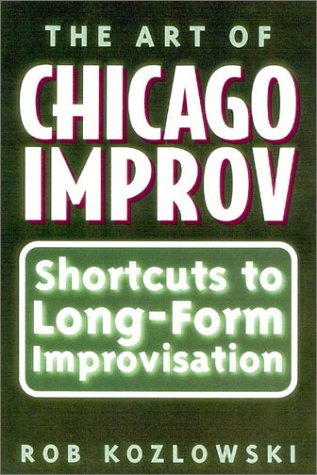
The Art of Chicago Improv: Short Cuts to Long-form Improvisation Improvisational theatre revolutionized American comedy and Chicago was its home. That city not only nurtured so much of the best work done; it also spawned many different styles that traveled around the country and the world. Experienced improv artist Rob Kozlowski trained at Chicago’s Second City and knows firsthand what improv really is and what it can achieve. He tells all in this account of the first 50 years of the Chicago improv scene. Kozlowski traces the history of improvisational acting in Chicago from the days of Viola Spolin to the appearance of the Compass, Second City, and today’s practitioners. In between, he takes a detailed look at Charna Halpern and the ImprovOlympic “revolution,” Del Close and the development of a long-form improvisation called the Harold, and all that followed. Kozlowski also provides a guide to improv troupes seeking a style that’s just right for them, with detailed descriptions of specific productions and discussions of the implications of pursuing certain improv techniques. His interviews with Annoyance Theater founder Mick Napier, ImprovOlympic veteran Noah Gregoropoulos, and ImprovOlympic’s Training Center Director Liz Allen reveal the challenges and joys of long-form improvisation and…
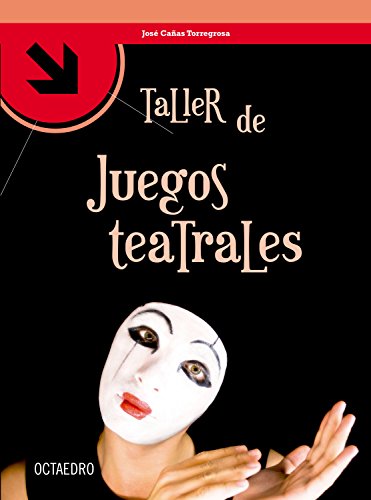
What if we play theater? What if we all have fun together, students and teachers, while learning fundamental dramatic techniques? Here is a guide to the auxiliary techniques of numerous expression games to practice dramatization. On our horizon, the fact that perhaps the group will then be encouraged to create its own play and perform it, or that it will be the student who wants to be the author of his or her own play and perform it as a whole. class… And beyond, to the limit: the joy and satisfaction of playing with theater.
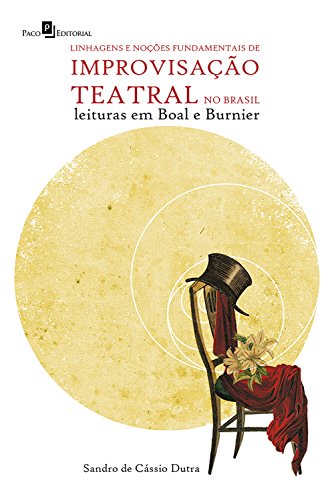
Linhagens e noções fundamentais de improvisação teatral no Brasil: Leituras em Boal e Burnier Doctoral thesis – Federal University of the State of Rio de Janeiro, 2013 In a historical-theatrical perspective, the author investigates what he considered the main sources of the conceptions of improvisation, namely, those coming from the Russian director and theorist Stanislavski and the Italian branch (Commedia dell’Arte and Eugenio Barba). This book is the result of an attempt to understand the fundamental notions of improvisation in Brazilian theater, present in the conceptions of Augusto Boal and Luís Otávio Burnier. In a historical-theatrical perspective, the author investigates what he considered to be the main sources of the conceptions of improvisation, namely, those coming from the director and the theorist. The Russian Stanislavski and the Italian part (Commedia dell’Arte and Eugenio Barba). Through the analysis of these references, followed by the investigation of the works of Boal and Burnier, the author suggests that, indeed, it is possible to establish significant comparisons between the conception of Stanislavski and Boal, on the one hand, and that of Barba (directly related to Commedia dell’Arte) and Burnier, from another. From these convergences, two improvising lineages are established: Stanislavski-Boal; commedia dell’arte/Barba-Burnier.
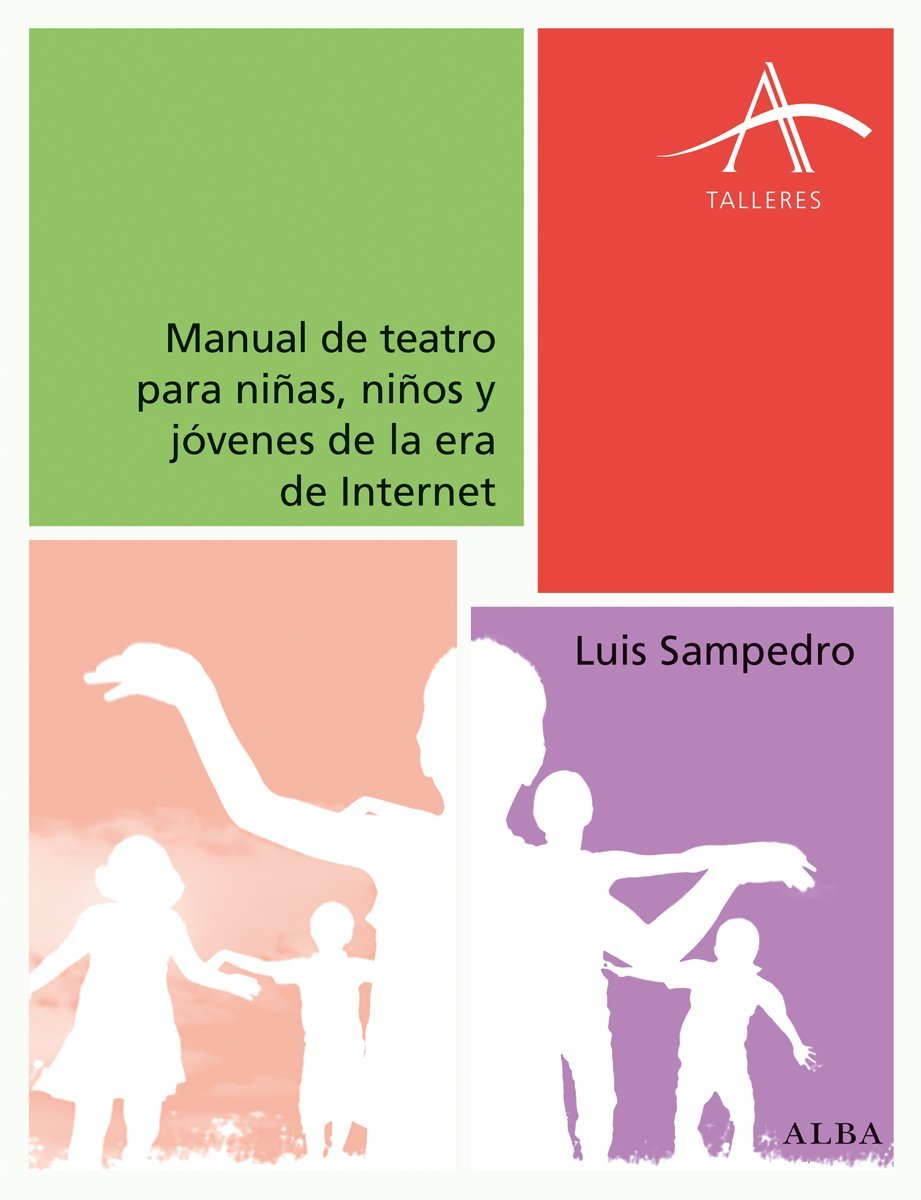
This is a manual for children and young people of this century to learn how to do theater. A book aimed at educators and parents who want to offer their students and children one of the best tools known to expand their personal horizon. From the age of four to 17, theatrical exercises take place here in a simple and fun way with which children and young people will master body language. This manual shows us that guaranteeing theatrical experiences in the teaching of children and young people is an urgent task in which we must all be part.
An immensely valuable resource book for drama leaders, House of Games is a how-to book for building up drama troupes and keeping them creative. House of Games is sure to take its place alongside the most established drama method texts. Following on from Keith Johnstone’s famous Impro and Augusto Boal’s Games for Actors and Non-Actors, Chris Johnston’s book provides ideas and guidance for drama groups of all kinds.
Creating Improvised Theatre: Tools, Techniques, and Theories for Short Form and Narrative Improvisation This book is an updated version (and in english) of the french book Jeux et Enjeux (2018). This book provides a modern view of improvised theatre based on the rapid evolution of this art form, shedding new light on classic theories as well as developing lesser known and emerging techniques, such as the Trance Mask. Instead of simply referencing classic theories, the book revisits them and places them in the context of contemporary improvisation techniques. Designed as a practical support, this guide contains over 130 exercises that allow its theories to come alive in workshops, rehearsals, and performance. The book is divided into four sections: * Nuts and bolts: The fundamental tools of improvisation to explore how to be spontaneously creative, build with your partner, and learn from masks to discover your scene instant by instant. * Short form: Techniques for scene work and short form performance, including how to get the most out of a scene, remain connected to the relational stakes, provoke change (physical, status, and emotional), and maintain a playful attitude. * Narrative improvisation: Theories to help navigate long form narrative-based shows with “narrative…
For 20 years, Piolo Juvera has dedicated himself to the art of theatrical improvisation, which consists of telling, acting and singing stories. Stories and songs that have not been previously written or planned, which are created on the spot based on contributions from the public. In this book he shares how the teachings of “Improv” can be applied to one’s own life, which is the maxim of improvisations. The skills that must be developed to accomplish these stage feats are the same ones that the author chose as his life philosophy and that he now addresses in the book: listening, acceptance, decision, adaptation, speaking loudly and clearly, being in the here-and-now, play seriously, follow fear, fail in new ways, be the protagonist that your story needs, use error to your advantage. Improvisation is not an indecipherable entelechy. It can be an art. But it is also a technique. It has a methodology and rules that anyone can learn. The first and most important of those rules: the YES-AND. I say “YES” to your proposal “AND” I add something to make it ours. Commonly loaded with comedy, theatrical improvisation can also surprise us with stories that move and excite, that inspire…
Improv for Democracy: How to Bridge Differences and Develop the Communication and Leadership Skills Our World Needs While much has been written about what democracies should look like, much less has been said about how to actually train citizens in democratic perspectives and skills. Amid the social and political crises of our time, many programs seeking to bridge differences between citizens draw from the surprising field of improvisational theater. Improv trains people to engage with one another in ways that promote empathy and understanding. Don Waisanen demonstrates how improv-based teaching and training methods can forward the communication, leadership, and civic skills our world urgently needs. Waisanen includes specific exercises and thought experiments that can be used by educators; advocates for civic engagement and civil discourse; practitioners and scholars in communication, leadership, and conflict management; training and development specialists; administrators looking to build new curricula or programming; and professionals seeking to embed productive, sustainable, and socially responsible forms of interaction in and across organizations. Ultimately this book offers a new approach for helping people become more creative, heighten awareness, think faster, build confidence, operate flexibly, improve expression and governance skills, and above all, think and act more democratically.