A Subversive’s Guide to Improvisation: Moving Beyond “Yes, And” Hey, improvisers, you can do whatever you want. In A Subversive’s Guide to Improvisation, Razowsky throws conventional improv wisdom on its head by giving you a unique take on how to create masterful improv scenes. He describes how his life philosophy and improv methodology have evolved on his journey from struggling actor to one of the world’s most respected improvisers and coaches. The challenge for most improvisers is sticking to “the rules” and believing “Yes, and” is the magic formula for a successful scene. Characters meander and travel from a state of fluidity to a mess of frustration and ask, “How did I go wrong?” A Subversive’s Guide to Improvisation provides methods and exercises that teach you to connect to your partner and the scene without worrying about responding with “yes, and.” Over 30 groundbreaking exercises will teach you how to: * Freely express your feelings. * Focus on the present. * Ask questions. * Say “no” to energize your scene. * Start a scene without establishing who, what, and where. David Razowsky studied, performed, taught, and directed at Second City with Stephen Colbert, Steve Carell, and Michael Keegan-Key, among others….
Improv books
Here you will find the most complete list of theatrical improv books, whether they are improv games, long-form improv or essays on the state of improv.
Book on Acting: Improvisation Technique for the Professional Actor in Film, Theater, and Television Stephen Book is a top Hollywood acting coach and teacher and a theatre director. His students have won Oscars, Emmys, Tonys, Obies, and Grammys. Thirteen of his present or former students are featured in either starring roles or as cast regulars in the current primetime television schedule. This book contains film and television scenes in which Book-coached actors, used his Improvisation Technique to create their performances. These scenes, showing the actors’ performance choices, demonstrate the use of Improvisation Technique in different genres of acting. Well-known theatre and film scenes are included, as well as scenes from such TV shows as ‘Frasier’, ‘Melrose Place’, ‘Star Trek: Voyager’, ‘LA Law’ and ‘The Practice’.
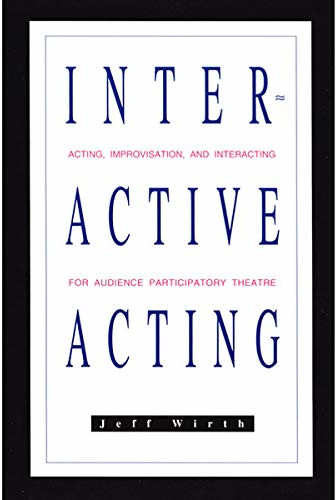
Interactive Acting: Acting, Improvisation, and Interacting for Audience Participatory Theatre A Ground-breaking guide to audience participatory theatre. Interactive acting is a step-by-step handbook that teaches actors how to successfully perform in audience participatory theatre. This book includes: – Descriptions of interactive performances – Methods to draw out good audience participation – Techniques to handle the unexpected – Performance tactics for off-stage environments – A concise review of improvisation skills – And much more
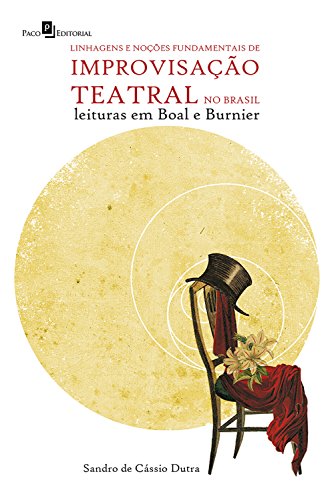
Linhagens e noções fundamentais de improvisação teatral no Brasil: Leituras em Boal e Burnier Doctoral thesis – Federal University of the State of Rio de Janeiro, 2013 In a historical-theatrical perspective, the author investigates what he considered the main sources of the conceptions of improvisation, namely, those coming from the Russian director and theorist Stanislavski and the Italian branch (Commedia dell’Arte and Eugenio Barba). This book is the result of an attempt to understand the fundamental notions of improvisation in Brazilian theater, present in the conceptions of Augusto Boal and Luís Otávio Burnier. In a historical-theatrical perspective, the author investigates what he considered to be the main sources of the conceptions of improvisation, namely, those coming from the director and the theorist. The Russian Stanislavski and the Italian part (Commedia dell’Arte and Eugenio Barba). Through the analysis of these references, followed by the investigation of the works of Boal and Burnier, the author suggests that, indeed, it is possible to establish significant comparisons between the conception of Stanislavski and Boal, on the one hand, and that of Barba (directly related to Commedia dell’Arte) and Burnier, from another. From these convergences, two improvising lineages are established: Stanislavski-Boal; commedia dell’arte/Barba-Burnier.
An immensely valuable resource book for drama leaders, House of Games is a how-to book for building up drama troupes and keeping them creative. House of Games is sure to take its place alongside the most established drama method texts. Following on from Keith Johnstone’s famous Impro and Augusto Boal’s Games for Actors and Non-Actors, Chris Johnston’s book provides ideas and guidance for drama groups of all kinds.
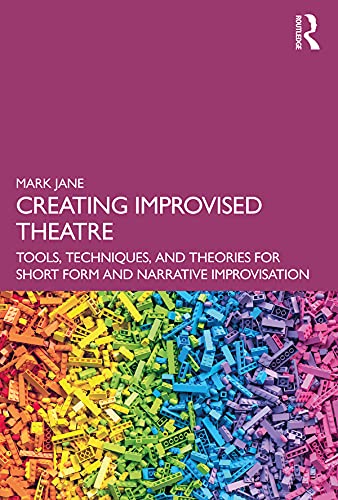
Creating Improvised Theatre: Tools, Techniques, and Theories for Short Form and Narrative Improvisation This book is an updated version (and in english) of the french book Jeux et Enjeux (2018). This book provides a modern view of improvised theatre based on the rapid evolution of this art form, shedding new light on classic theories as well as developing lesser known and emerging techniques, such as the Trance Mask. Instead of simply referencing classic theories, the book revisits them and places them in the context of contemporary improvisation techniques. Designed as a practical support, this guide contains over 130 exercises that allow its theories to come alive in workshops, rehearsals, and performance. The book is divided into four sections: * Nuts and bolts: The fundamental tools of improvisation to explore how to be spontaneously creative, build with your partner, and learn from masks to discover your scene instant by instant. * Short form: Techniques for scene work and short form performance, including how to get the most out of a scene, remain connected to the relational stakes, provoke change (physical, status, and emotional), and maintain a playful attitude. * Narrative improvisation: Theories to help navigate long form narrative-based shows with “narrative…
For 20 years, Piolo Juvera has dedicated himself to the art of theatrical improvisation, which consists of telling, acting and singing stories. Stories and songs that have not been previously written or planned, which are created on the spot based on contributions from the public. In this book he shares how the teachings of “Improv” can be applied to one’s own life, which is the maxim of improvisations. The skills that must be developed to accomplish these stage feats are the same ones that the author chose as his life philosophy and that he now addresses in the book: listening, acceptance, decision, adaptation, speaking loudly and clearly, being in the here-and-now, play seriously, follow fear, fail in new ways, be the protagonist that your story needs, use error to your advantage. Improvisation is not an indecipherable entelechy. It can be an art. But it is also a technique. It has a methodology and rules that anyone can learn. The first and most important of those rules: the YES-AND. I say “YES” to your proposal “AND” I add something to make it ours. Commonly loaded with comedy, theatrical improvisation can also surprise us with stories that move and excite, that inspire…
On he walks on a empty stage. A player comes with. The director calls out. to the audience. what have they goin’. The crowd cheers. Now. the stage is set… they walk off again and
This best-selling book by Viola Spolin offers the most comprehensive theater instruction for all types of students, from small children to young adults. It includes over 130 theater games, plus exercises and instructional strategies. First developed by Spolin, the originator of modern improvisational theater techniques, these games have been tried and tested for over fifty years.
Theatrical Games. Awareness raising, improvisation, character construction. Acting techniques This book collects the pedagogical work of the author, who for 16 years has combined her experience as an actress and teacher to systematize, specify and propose coherent material for teachers, students and theater directors, on useful and simple dynamics to design a theater program. The first part is based on different games and exercises that are used to prepare the actor, compiled from the experience of the author and from the teachers Clive Barker and Viola Spolin. The second part is focused on the work of the teacher based on acting techniques such as The Comedy of Art, the Stanislavski technique, the Michael Chekhov technique and the Neutral Circle technique.