english

Yes Please (Amy Poehler)
/ 18 de March de 2018

Do you want to get to know the woman we first came to love on Comedy Central’sUpright Citizens Brigade? Do you want to spend some time with the lady who made you howl with laughter onSaturday Night Live, and in movies like Baby Mama, Blades of Glory, andThey Came Together? Do you find yourself daydreaming about hanging out with the actor behind the brilliant Leslie Knope onParks and Recreation? Did you wish you were in the audience at the last twoGolden Globes ceremonies, so you could bask in the hilarity of Amy’s one-liners? If your answer to these questions is “Yes Please!” then you are in luck. In her first book, one of our most beloved funny folk delivers a smart, pointed, and ultimately inspirational read. Full of the comedic skill that makes us all love Amy,Yes Please is a rich and varied collection of stories, lists, poetry (Plastic Surgery Haiku, to be specific), photographs, mantras and advice. With chapters like “Treat Your Career Like a Bad Boyfriend,” “Plain Girl Versus the Demon” and “The Robots Will Kill Us All” Yes Please will make you think as much as it will make you laugh. Honest, personal, real, and righteous,Yes Please…
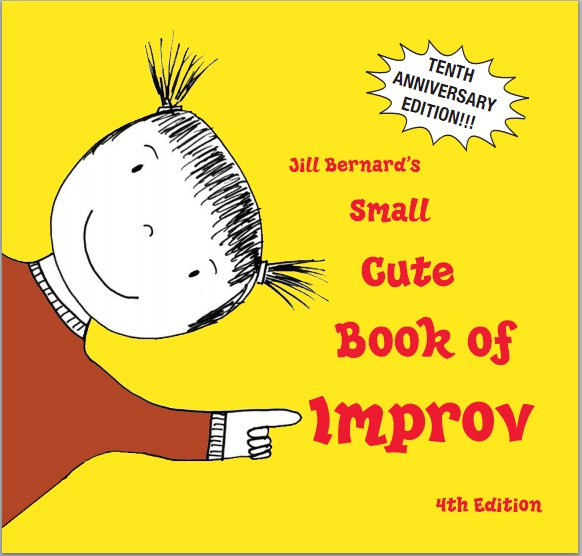
Jill Bernard’s Small Cute Book of Improv (Jill Bernard)
/ 17 de March de 2018

Jill Bernard, a favorite on the improv festival circuit, shares her method of creating spontaneous characters, VAPAPO. This tiny book is an easy way to get more into the scene and less into your head with shortcuts to fuller, playful characters. This tenth anniversary edition features even more original essays on improv. It measures 6″x6″ and is 20 pages long. Every order envelope features original art by the author, just for you. Only $5 plus $2 shipping & handling. “A must read. This book might change your life.” — Joe Bill “It speaks from the heart and to all the voices in your head.” — Mark Sutton

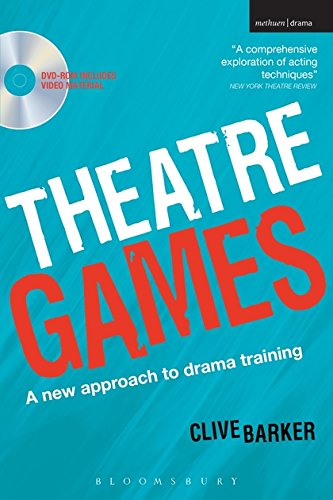
Theatre Games: A New Approach to Drama Training (Clive Barker)
/ 17 de March de 2018

“Clive Barker’s book is more than just a guidebook of improvisational games for actors: it is, rather a comprehensive exploration of acting techniques” New York Theatre Review “Theatre Games is a massive contribution to the art of theatre…A bulging portfolio of credo, craft, advice and instruction…It is dazzlingly astute and a thrilling read – quite unlike a text-book, rather a long, fascinating chat into the small hours” The Stage Theatre games are a method of training actors that was developed in the 20th century by leading practitioners including Clive Barker, who trained actors at Joan Littlewood’s Theatre Workshop in its heyday. He developed his “theatre games” system over 20 years and proved its effectiveness for teachers, students and actors alike. His famous book combines his philosophy and approach to games, describes how to play them and the acting skills which can develop out of them. The games are arranged in order of complexity and illustrated with photographs and diagrams. This re-issue of this classic and timeless text now includes a DVD with video material showing Clive Barker teaching his games in a studio and contains background information and first hand material from Clive himself. Theatre Games will enable anyone involved…

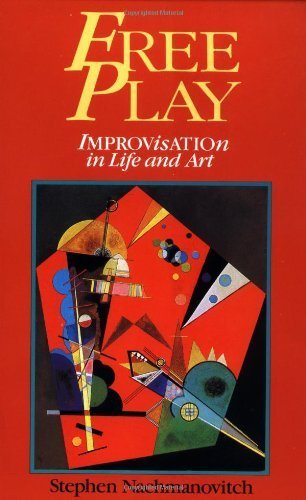
Free Play (Stephen Nachmanovitch)
/ 17 de March de 2018

Free Play discusses the inner sources of spontaneous creation, explains how to learn the skills of improvisation, and suggests ways to overcome common obstacles to creativity.

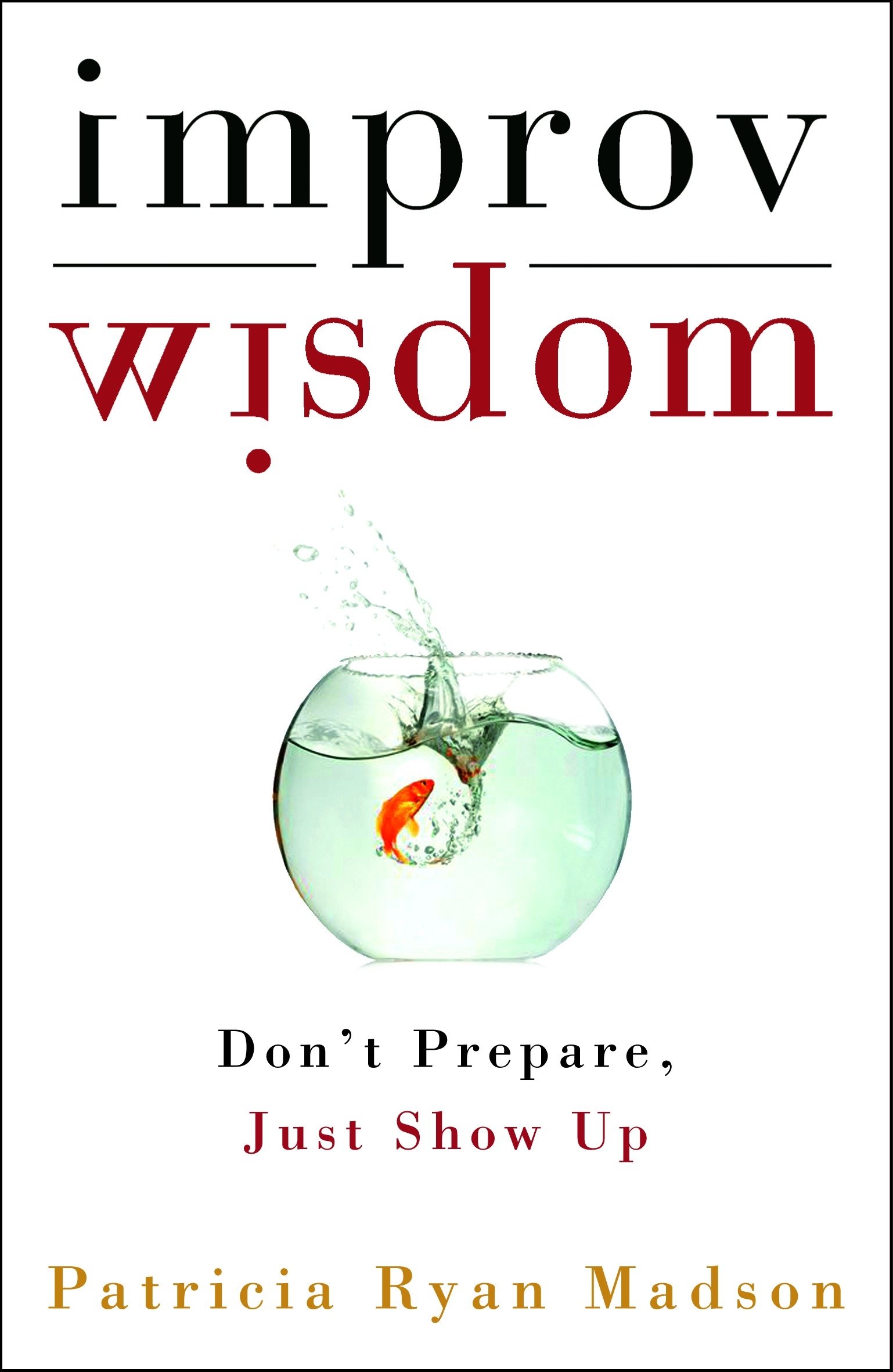
Improv Wisdom / Sabiduría de la Impro (Patricia Ryan Madson)
/ 17 de March de 2018

In an irresistible invitation to lighten up, look around, and live an unscripted life, a master of the art of improvisation explains how to adopt the attitudes and techniques used by generations of musicians and actors. Let’s face it: Life is something we all make up as we go along. No matter how carefully we formulate a “script,” it is bound to change when we interact with people with scripts of their own. Improv Wisdom shows how to apply the maxims of improvisational theater to real-life challenges–whether it’s dealing with a demanding boss, a tired child, or one of life’s never-ending surprises. Patricia Madson distills thirty years of experience into thirteen simple strategies, including “Say Yes,” “Start Anywhere,” “Face the Facts,” and “Make Mistakes, Please,” helping readers to loosen up, think on their feet, and take on everything life has to offer with skill, chutzpah, and a sense of humor. Listen on audible, narrated by Patricia Ryan Madson

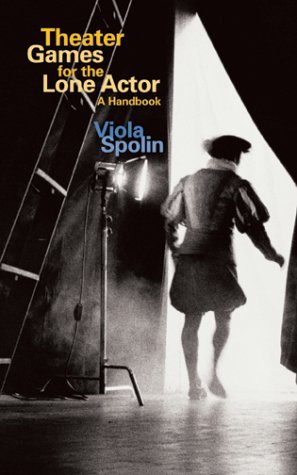
Theater Games for the Lone Actor (Viola Spolin)
/ 17 de March de 2018

Spolin’s Theater Games for the Lone Actor offers theater games a side coaching for the solo player. Available for the first time, this handbook presents more than forty exercises that allow actors to side coach themselves at home, in rehearsal, or in performance. Building on her seminal Improvisation for the Theater, Spolin challenges the actor to develop an ability to enter present time, “a moment of full consciousness, awareness, continuous time, a timeless moment … with all of your responses awake and alert, ready to guide you…allowing you, the real you, or your natural self, to emerge.”

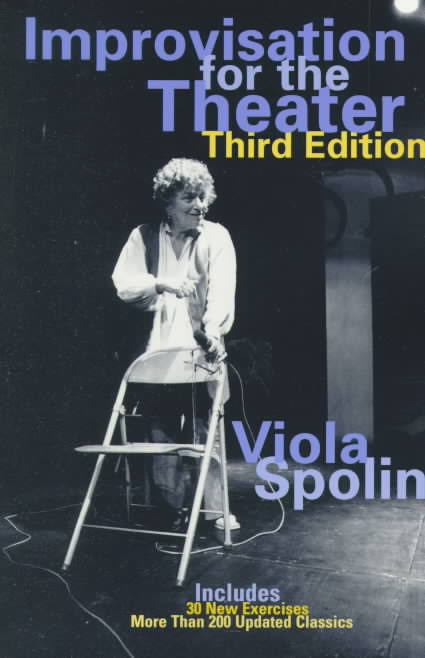
Improvisation For The Theater (Viola Spolin)
/ 17 de March de 2018

Improvisation For The Theater: A Handbook Of Teaching And Directing Techniques Spolin changed the face of modern American theater with this book. He having trained three generations of theater, television and film actors, directors, teachers and writers. His techniques have a profound influence on the fields of education, mental health, social work and psychology. He is essential. “Spolin’s book is a visionary effort…it is hardly an overstatement to call it revolutionary…her practical and keen psychological insight will have a deep and wide impact on all directing and acting for the theater.” – Variety. “Her book is the bible” – Rob Reiner This book can be obtained in digital format for less than €5

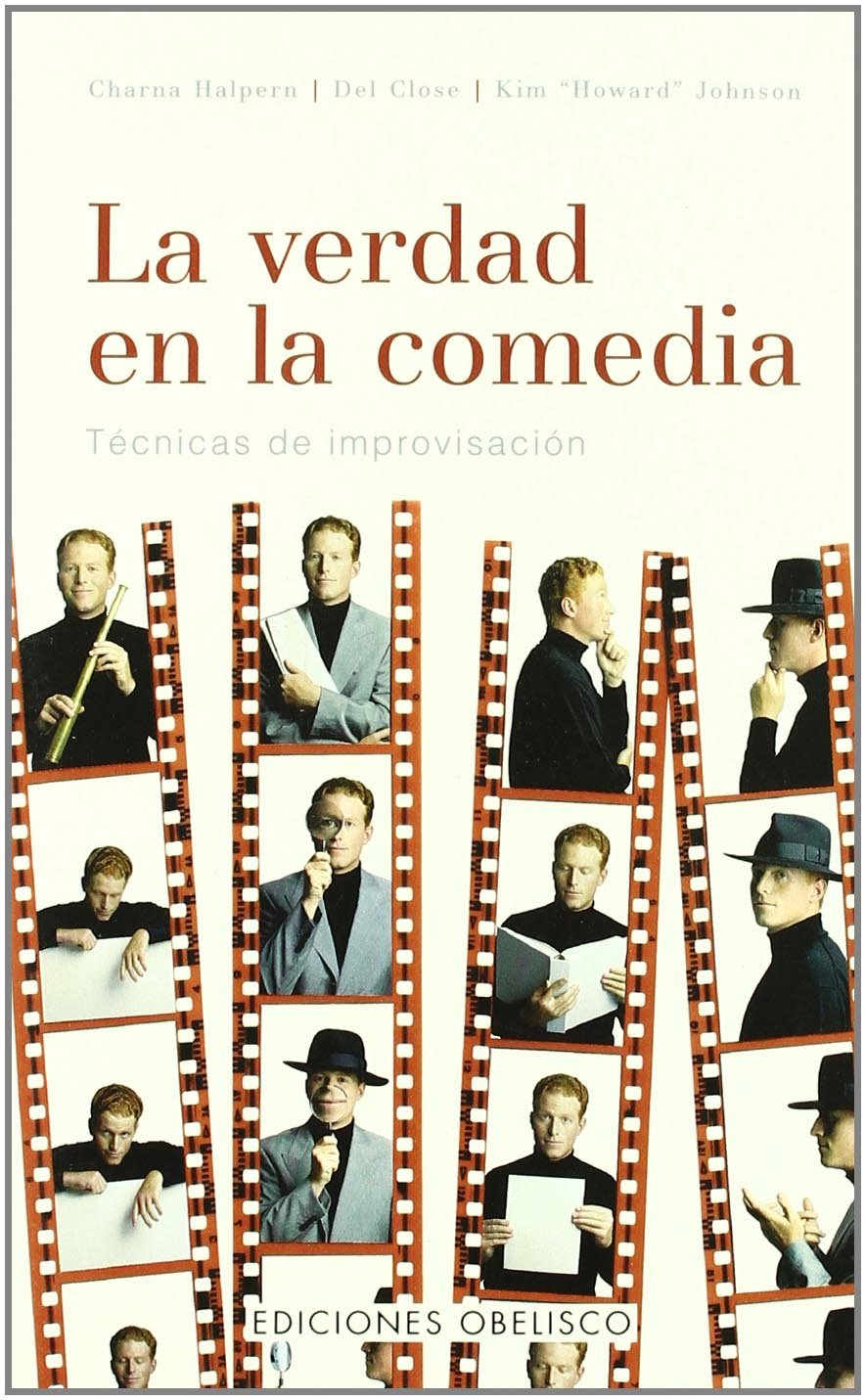
La verdad en la comedia / Truth in Comedy (Charna Halpern, Del Close)
/ 17 de March de 2018

The ‘Harold’, an innovative improvisational tool, helped many actors on the road to TV and film stardom, including George Wendt (Norm on Cheers). Now it is described fully in this new book for would-be actors and comics. The ‘Harold’ is a form of competitive improv involving 6 or 7 players. They take a theme suggestion from the audience and ‘free associate’ on the theme into a series of rapid-fire one-liners that build into totally unpredictable skits with hilarious results. The ‘Harold’ is a fun way to ‘loosen up’ and learn to think quickly, build continuity, develop characterisations and sharpen humour.

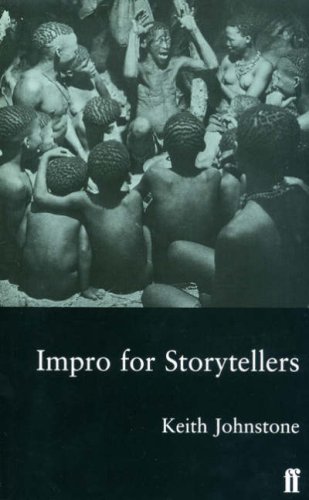
Impro for Storytellers (Keith Johnstone)
/ 17 de March de 2018

Since the sixties, Keith Johnstone has led the work on improvisation in theatre, schools and universities. His unique ideas, set out in the classic text, Impro, have now been taken up by practitioners the world over. Impro for Storytellers builds on and extends the seminal earlier work. Keith’s techniques specialize in releasing an individual’s potential within the context of group work. He became notorious as the acting coach who would shout ‘Be more boring!’ and ‘Don’t concentrate!’. Keith Johnstone is an inspirational teacher and writer, and Impro for Storytellers will encourage a life-long study of human interaction.

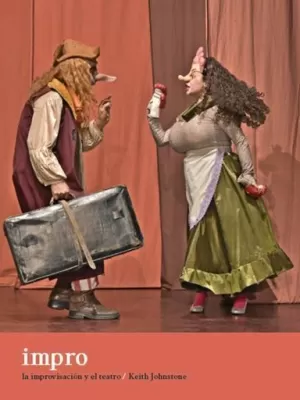
Impro (Keith Johnstone)
/ 17 de March de 2018

In this landmark work Keith Johnstone provides a revelatory guide to rediscovering and unlocking the imagination. Admired for its clarity and zest, Impro lays bare the techniques and exercises used to foster spontaneity and narrative skill for actors. These techniques and exercises were evolved in the actors’ studio, when he was Associate Director of the Royal Court and then in demonstrations to schools and colleges and ultimately in the founding of a company of performers called The Theatre Machine. Divided into four sections, ‘Status’, ‘Spontaneity’, ‘Narrative Skills’ and ‘Masks and Trance’, arranged more or less in the order a group might approach them, the book sets out the specific approaches which Johnstone has himself found most useful and most stimulating. The result is a fascinating exploration of the nature of spontaneous creativity. ‘If teachers were honoured in the British theatre along-side directors, designers and playwrights, Keith Johnstone would be as familiar a name as are those of . . . Jocelyn Herbert, Edward Bond and other young talents who were drawn to the great lodestone of the Royal Court Theatre in the late 1950s. As head of the script department, Johnstone played a crucial part in the development of the…