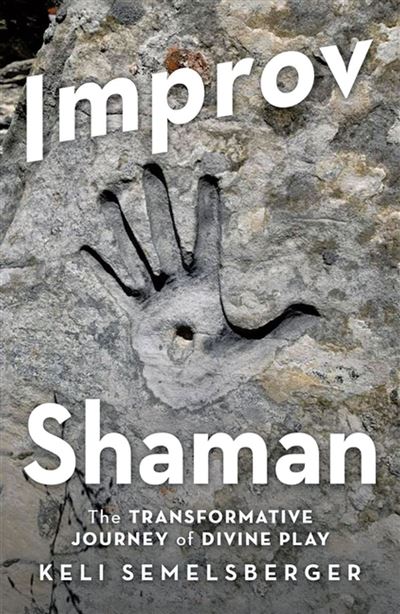
The Transformative Journey of Divine Play Improv comedy is known as a challenging comedic performance art, which Keli has been teaching, directing and performing for over a quarter of a century. As Keli expanded her world view by traveling to sacred places and training with master spiritual teachers, she came to understand that improv was not just her art and her job, it was her medicine. Not only was it her practice to sooth her own soul, but it was the way in which she, has been able to be a “hollow bone” and let the healing energy of Divine play move through her and transform the lives of her students. This book is her love letter to improv, and to all the brave souls willing to live in the moment, to accept themselves and others as they are, and to co create with the world by saying YES, and……
english
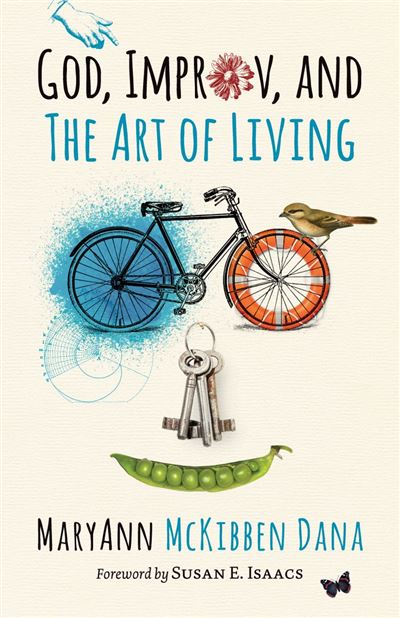
“We’re all improvisers,” says MaryAnn McKibben Dana, whether we realize it or not. In this book McKibben Dana blends personal stories, pop culture, and Scripture into a smart, funny, down-to-earth guide to the art of living*.* Offering concrete spiritual wisdom through seven improv principles, she helps readers become more awake, creative, resilient, and ready to play—even (especially) when life doesn’t go according to plan..
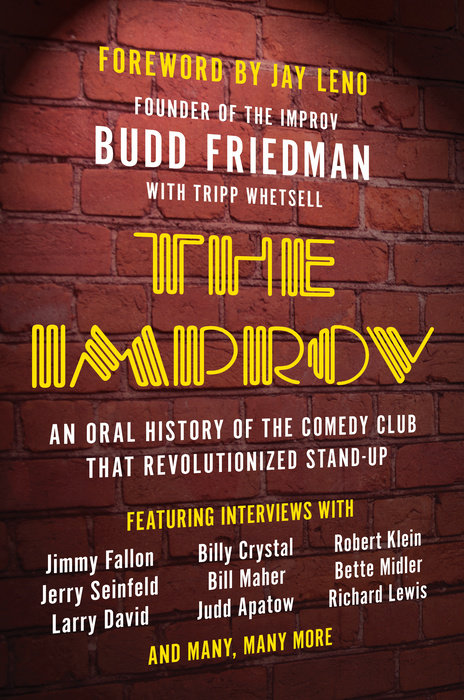
The Improv : An Oral History of the Comedy Club that Revolutionized Stand-Up Featured in the New York Times 2017 “Holiday Gift Guide for Hardcover Fans”.. Get an insider’s oral history of the World’s most iconic comedy club, featuring exclusive interviews with today’s most hilarious stars recalling their time on stage (and off) at the Improv. In 1963, 30-year-old Budd Friedman—who had recently quit his job as a Boston advertising executive and returned to New York to become a theatrical producer—opened a coffee house for Broadway performers called the Improvisation. Later shortened to the Improv, its first seedy West 44th Street location initially attracted the likes of Judy Garland, Liza Minnelli, Albert Finney, and Jason Robards, as well as a couple of then-unknowns named Dustin Hoffman and Bette Midler. While it drew near-capacity crowds almost from day one, it wasn’t until comedians began dropping by to try out new material that the Improv truly hit its stride. The club became the first venue to present live stand-up in a continuous format, and in the process reinvented the art form and created the template for all other comedy clubs that followed. From the microphone to the iconic brick wall, the Improv…
Winging It: Improv’s Power & Peril in the Time of Trump In Winging It, literary scholar and cultural polymath Randy Fertel returns to the interrogation of improvisation he began with his earlier work Taste for Chaos (2015). In this new volume, Fertel explores the wider landscapes of popular culture and public affairs, ranging deftly from the unmediated experience in hook-up culture, psychedelic trips, Fred Astaire’s tap dancing, Frans Hals’s brush strokes, social media, and Hamilton‘s hip-hop to—last, though alas not least—the performative and demagogic posturing of Donald Trump. The gesture all improvisations share—I will create this on the fly, or as Trump has it, my gut knows more than many brains—defies rationality and elevates embodied emotions, instinct, and intuition, challenging our assumption that everything of value depends upon long study, tradition, and hard work. Claiming to be free of serious purpose, improvisation only pursues pleasure. Or so it says.
The arc of Western civilization has always driven toward mastering the world through reason, will, craft, and objectivity. Yet shadowing this arc is another that suggests we can know more of the world through non-rational means—through spontaneity, intuition, instinct, and subjectivity. “A Taste for Chaos” explores this undercurrent of spontaneity in literature and the arts. It identifies a new metagenre where improvisation rules: texts that claim to have been written without effort or craft, like an idea that hits you in the shower, each a challenge to the mainstream, dominant culture. It argues that while once written from the margins, improvisations make up much of the Western Canon’s center: John Milton’s “Paradise Lost,” Laurence Sterne’s” Tristram Shandy,” William Wordsworth’s “Tintern Abbey,” Alfred Lord Tennyson’s “Idylls of the King,” Mark Twain’s “Adventures of Huckleberry Finn,” James Joyce’s “Ulysses,” ThomasMann’s “Dr. Faustus.” It also offers close readings of C.G. Jung’s “Red Book” and Ian McEwan’s” Saturday.”
Life and faith are improvisational theater, and finding meaning is a work in progress. From first breath to the first day of school, from first dates to last rites, most of us struggle with the overwhelming desire to find meaning. How do we love well, stay authentic, build community, enjoy life, and live justly all at the same time? No one knows. God may have a plan, but God never gave us the script. This book will teach strategies to escape the oppressive voice of self-doubt, foster compassionate creativity, transform Christian faith into a meaningful life practice, and organize communities of faith based on the the principles of improvisational theater. Each chapter will focus on a skill or practice of improv, made relevant through autobiographical stories of and grounded in the Christian tradition. The end of each chapter will include brain exercises the average reader can do to strengthen the creative neural pathways required to master the improv skill for living.
Improv at Work: What the Business World Can Learn from Improvisational Comedy Improv at Work is an inspirational guide, designed to transform the stressed and struggling workplace into one of creativity, empowerment, and fun, similar to the environment surrounding improvisational comedy (aka, improv). Professionals with only a few years of work experience to the most competent leaders will draw inspiration from this book to optimize workplace communication, collaboration, and innovation. In today’s workplace, technology shortcuts and overscheduled calendars are hindering our ability to grow the crucial interpersonal skills necessary for high-performing and thriving businesses. If we want to realize the full potential of what’s possible in the workplace, we must avoid neglecting our own interpersonal skill development. This is where improv fits into the picture. Improv at Work will: Here’s what the workplace had to say about experiencing workshops based on Improv at Work: “Fantastic session — relevant, engaging, and fun!” “I think the muscles you helped us train are critical for success… The agenda, activities, and examples were well designed and executed.” “I found multiple ways to learn more about my colleagues and clients and have fun at the same time. I also found the Improv workshop to be an excellent way to be more…
This hybrid engineering manual and improv manual gives practical tips on how to boost design skills and design thinking with improv exercises. It pushes designers to trust their teams, take initiative, focus on the customer, and better transform abstract ideas into reality. Engineers, artists, makers, software developers, and entrepreneurs will find the most benefit from this guide, especially if they work in teams and strive to innovate. Teachers and trainers can also use this guide to supplement their lessons in design. First the guide details a number of selected engineering methods and skills that are both key to the design process and related to improv principles. These methods and skills all relate to the themes of teamwork, creativity and ideation, handling failure, empathy, and design representation. Then the guide details how to play over twenty-five fun and challenging games from the improv and art worlds that have direct applications to design skills. The connection between each game and a design skill is explicitly explained. Questions are also provided to give readers a chance to self-reflect on how a game might apply to them. The author draws on his own experience in engineering education and improv to compile this handy design…
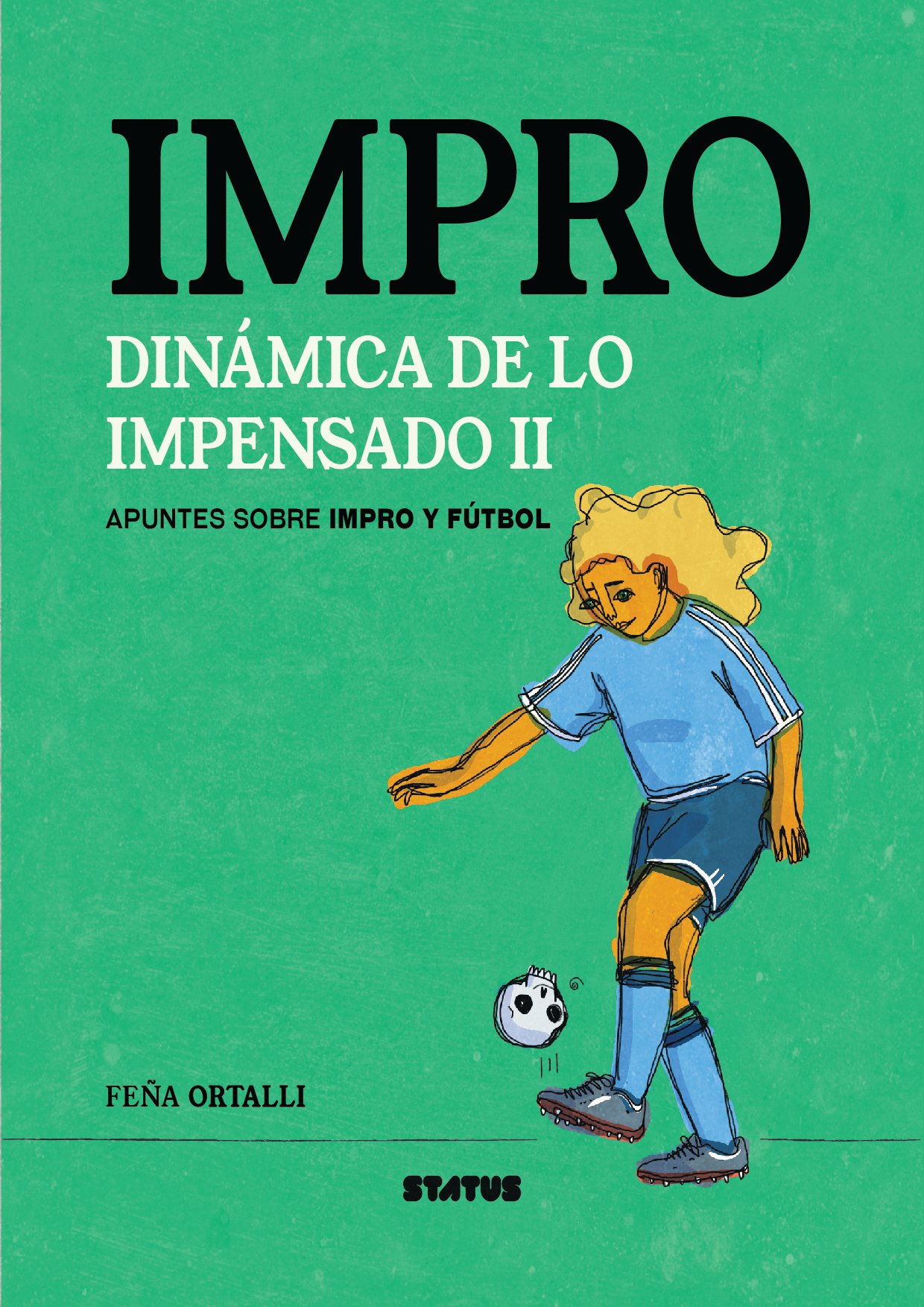
Because a football match always has two halves. Status Ediciones is happy to announce that the second part of the book Impro: Dynamics of the Unexpected, by Feña Ortalli is ready! The book features even more similarities between football and impro, personal anecdotes and technical points of view from the author. Web
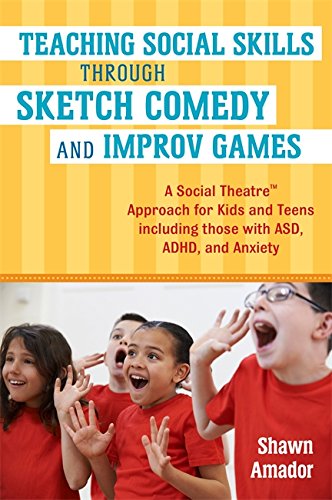
Teaching Social Skills Through Sketch Comedy and Improv Games: A Social Theatre™ Approach for Kids and Teens including those with ASD, ADHD, and Anxiety. Introducing a Social Theatre™, this book provides guidance on how to deliver fun and transformative activities to develop social skills in teenagers and children. Drawing on ideas from Social Thinking®, CBT, mindfulness and assertiveness training this book develops games, skits and short plays which can be adapted to suit children and teenagers including those who are gifted, typical, and those with mild to moderate cognitive abilities. These activities will help participants become more assertive and flexible as well as improving confidence, focus and self-esteem. Social Theatre™ can be used in small groups, in class or throughout the school, as well as in group therapy sessions. It provides a new and inclusive way to teach social skills and collaborative learning and is especially useful for those with anxiety, ADHD and ASD.